

Under National Socialism, warehouses in the future Grasbrook district served as satellite camps of the Neuengamme concentration camp. Four of the victims are now remembered by name.
Felix Amsel
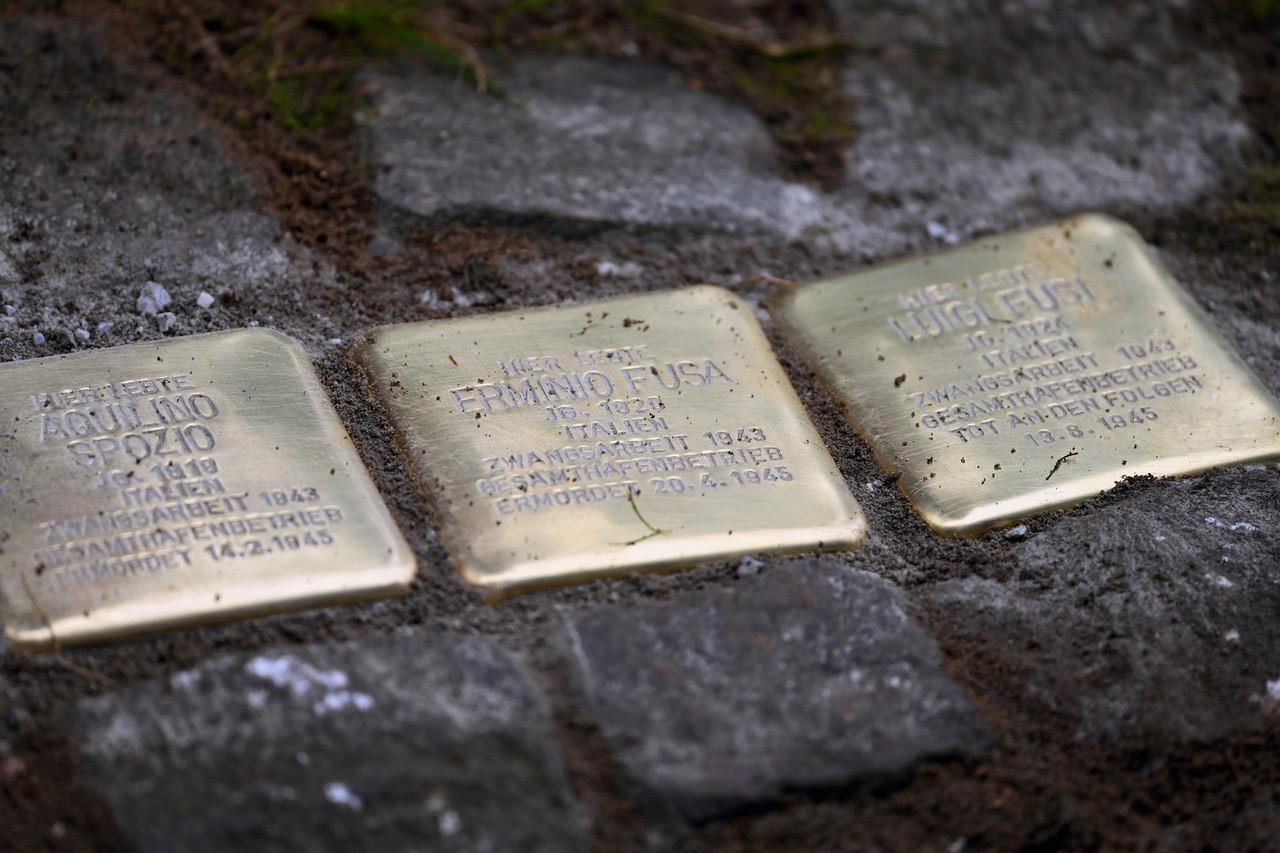
Articulated lorries drive past every minute. The mighty trailers rattle over the uneven pavement with their wide tires. The noise of the port and roadworks at Dessauer Ufer is omnipresent. The sound of another jackhammer is not even noticeable, especially as Gunter Demnig does not need long: he has been working on the corner of a recessed, elongated brick building for less than a quarter of an hour when three shiny brass stones are anchored in the ground. Without a word, Demnig pulls his hat down over his face and leaves, as if the artist does not want to distract from the commemoration that his Stolpersteine now represent throughout Europe.
According to Demnig, he has already laid stones commemorating the fates of victims of National Socialism in more than 1,200 German municipalities. For Hamburg, a database of the State Center for Political Education registers around 7000 names. Nevertheless, many still remain in the dark. One chapter that is often less well known, for example, is the fate of forced laborers, such as those at Lagerhaus G am Dessauer Ufer. Now located in the new Grasbrook district, it served as a satellite camp of the Neuengamme concentration camp from 1944-45. Like the outbuildings, it was used for prisoners of war who had to carry out forced labor in the port. Among them were the Italian soldiers Aquilino Spozio, Erminio Fusa and Luigi Fusi. According to research by the "Project Group Italian Military Internees Hamburg", they were captured by the Wehrmacht after the armistice between Italy and the Allies was announced in September 1943 and deported to Germany. All three died in Hamburg in 1945, murdered or as a result of forced labor. Another stone has long commemorated Margarethe Müller from Prague, who died in 1944.
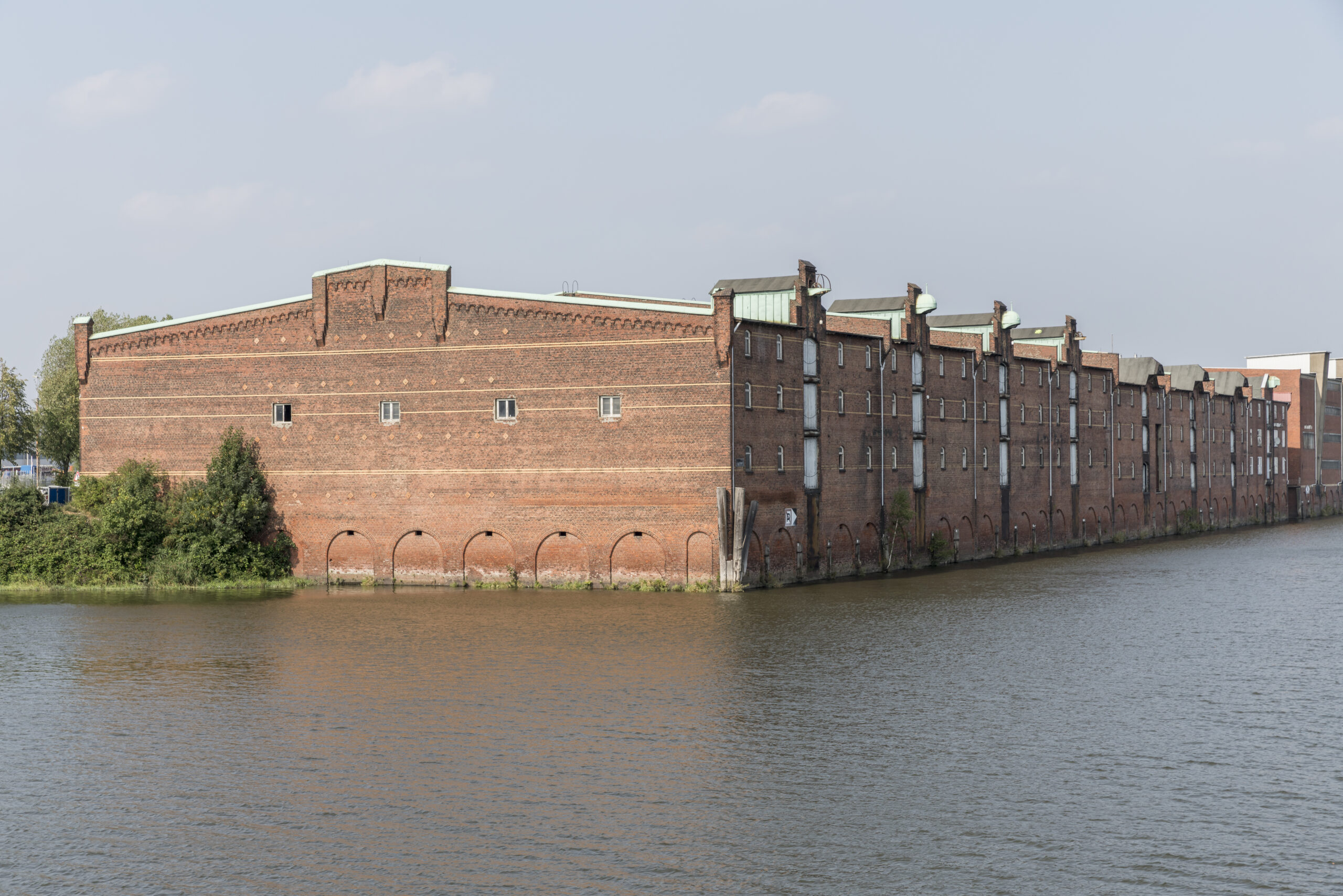
Lagerhaus G was used as a concentration camp outpost
© Miguel Ferraz
Memorial planned
In future, a memorial to document forced labor and subcamps during the Nazi era is to be created in part of Warehouse G. To this end, HafenCity Hamburg GmbH , together with the Hamburg Memorials Foundation and places of learning, is in regular contact with all parties involved. An important step in the conception of the memorial site is an inventory of the building as a historical monument. Meanwhile, the laying of stumbling stones contributes to the remembrance of victims of Nazi violence in public spaces. With the development of Grasbrook into a mixed district where thousands of people live, work and spend their leisure time, the Stolpersteine will also be given a new lease of life.